
How Wisconsin State Patrol Arrests Work
Think of WSP as the state's highway enforcement division inside the Wisconsin Department of Transportation. That is the role. Troopers work traffic stops, warrants, and criminal contacts across Wisconsin roads. They do make arrests in the field. Wisconsin publications sort these contacts into categories. Examples include controlled substances, warrants, other non-traffic arrests, and probation or parole contacts. There is no single statewide booking roster, though, because WSP does not operate a jail.
One arrest can leave paper in several places. WSP keeps its own incident, citation, and enforcement records. The jail that accepts the person creates a separate booking record. Prosecutors and courts may open case files later on their own schedules. The Wisconsin State Patrol agency page names the division. It links out to news, enforcement, and request resources.
The Wisconsin State Patrol agency page is a plain introduction to who the division is.
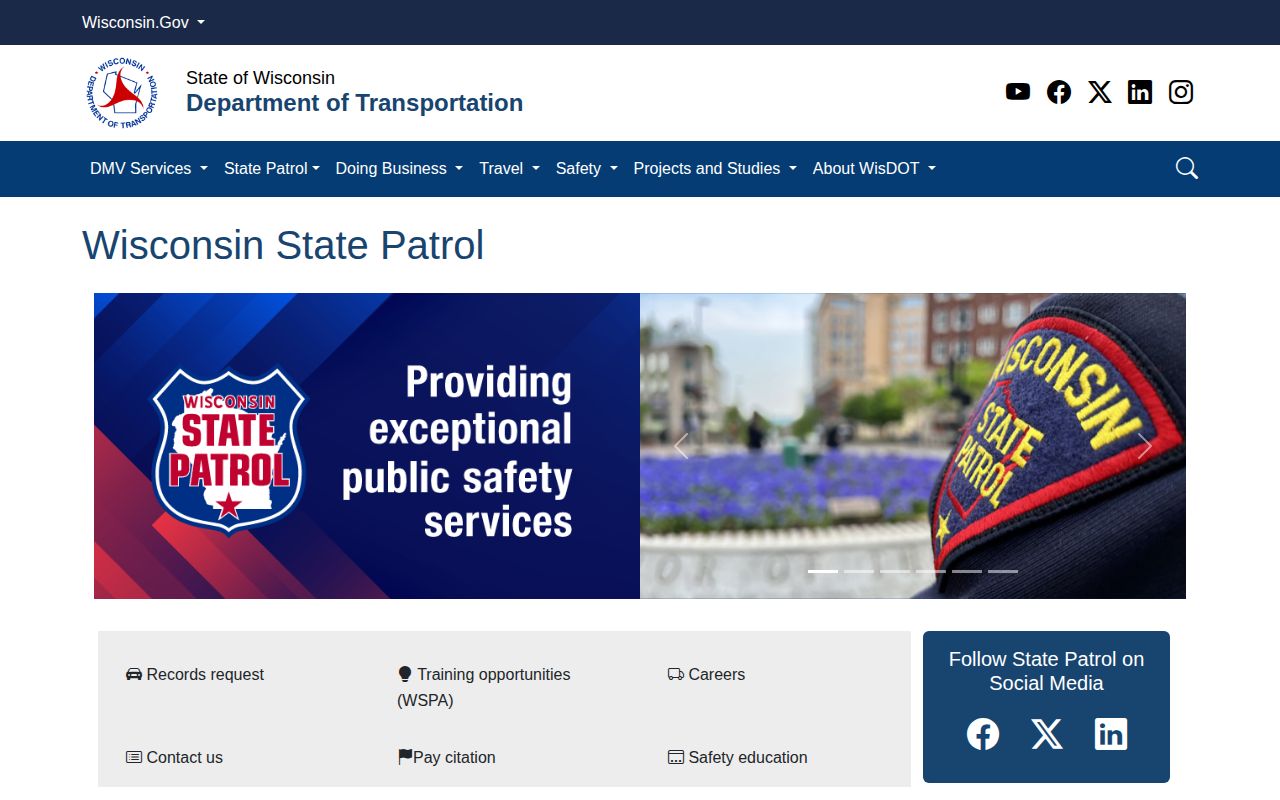
That agency page is a starting point, not a list of people arrested. The actual arrest record may sit with WSP, the receiving jail, or both, in different forms.
Where WSP Arrest News Appears
Where does WSP arrest news actually live? In WisDOT's broader newsroom, not a dedicated booking portal. Agency materials also point to State Patrol news feeds and social channels. The publication type matters, since a campaign summary can report enforcement results without naming anyone or showing jail booking data.
| Official channel | What it provides | What it does not replace |
|---|---|---|
| WisDOT Newsroom | Selected State Patrol news releases among other WisDOT news, including traffic-safety and enforcement announcements. | A daily name-level arrest or dispatch log. |
| WSP agency page | Agency information and links to State Patrol news, enforcement resources, and records requests. | A jail roster or complete list of WSP arrests. |
| 2023 WSP annual report | Regional and aggregate enforcement context, including reported criminal arrest and contact categories. | Names, individual booking records, or a current custody check. |
For current releases, the WisDOT newsroom is the official source. It covers far more than State Patrol items. The newsroom page displays the release feed alongside regional navigation, so narrow your search by agency and event.
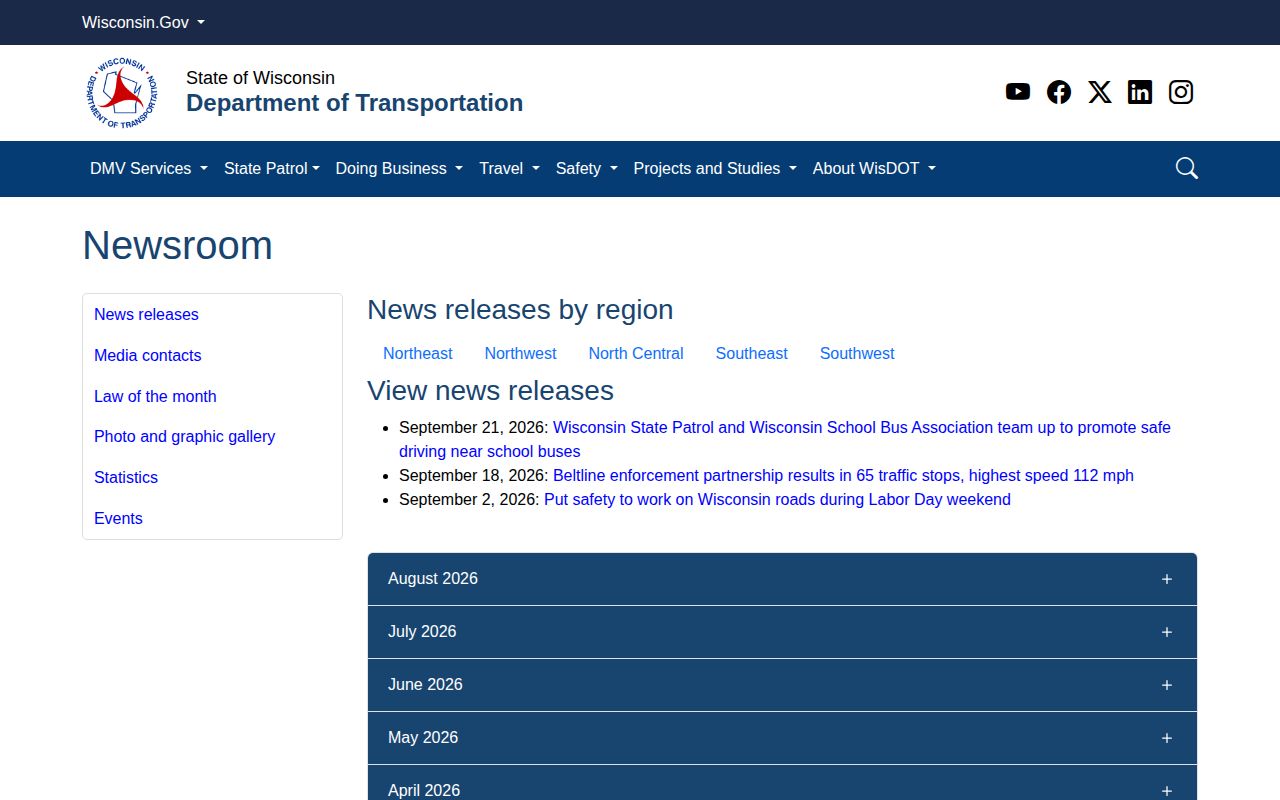
The newsroom only organizes published releases. An arrest left off the list may still have happened.
Note: A release is an agency-selected publication, while a jail roster reflects the receiving facility's own custody entries.
Why WSP Has No Daily Arrest Log
WSP publishes no daily arrest log. There is no dispatch feed and no same-day booking list. That gap reflects the publication set, not the agency's recordkeeping. Newsroom entries are event-based, and annual reports summarize arrests by category. Neither one stands in for requesting records of a specific incident.
This also explains a common frustration. A WSP news search returns a broad campaign announcement but nothing on an individual stop. Troopers arrest people without press releases. A release may cover stops, citations, impaired-driving enforcement, or crashes while leaving out names. For a particular incident, the practical route has two steps. Figure out which agency holds the record. Then request the documents from that office.
The agency page links to news and enforcement resources. The newsroom carries selected releases. Neither is a live name search or a dispatch archive. Social posts can flag an event or campaign. But each is just an agency communication with its own date and scope, never a substitute for the underlying report. When a release names a county or municipality, use that location. It helps you find the separate jail or records office that may hold the booking entry.
A campaign report or a missing newsroom result is not an arrest history. If the event ended in jail custody, check the receiving facility's roster on its own.
Finding a Wisconsin State Patrol Arrest
A named WSP event calls for two separate checks: the publication path and the custody path. Begin with the date and place. Then go to whichever agency or jail holds the record you need. Know the location but not the county? The statewide County Directory can pin down the local jurisdiction. It links to county sites. Roster and booking formats vary from one place to the next.
- Search the WisDOT newsroom for the event, roadway or community, date range, and enforcement topic. Check the State Patrol area of the site rather than assuming all newsroom entries concern WSP.
- Read the release for its scope. Note whether it describes arrests, stops, citations, a campaign total, or another event. Do not treat a summary count as a list of named arrestees.
- If the person may have been booked, identify the receiving county, city, or other facility. Check that agency's current roster or booking page, if it publishes one.
- If the online sources do not answer the question, request the existing WSP or local jail record from the office that likely created it. Include enough incident details to help staff locate the record.
For a fresh booking, county posting windows differ. The statewide same-day arrests overview lays out the kinds of county views and why a new booking may lag before it appears.
Where WSP Arrestees Are Booked
The Wisconsin State Patrol patrols highways. It does not run jails. After a WSP arrest in Wisconsin, the person is typically booked at a county jail. A municipal jail or another accepting facility may take that role instead. Which one depends on where the event happened. It also depends on which agency takes the next custody step. Do not assume every arrest lands in the county where the traffic stop occurred. State Patrol does not publish a booking list of its own.
Once a jail takes the person in, that facility's roster or booking page is where to look. It shows current custody and any booking photo made public. Keep this in mind. The WSP incident record and the county booking record can be two separate files. A roster may drop a name after release. The arrest record still sits with the agency.
Not every arrest ends in a county booking, either. Some people go to a municipal facility or another receiving agency. Some events close without a jail booking at all. So a county roster is a smart next check, not a full inventory of Wisconsin arrests by WSP. If you find no match there, confirm the destination with the arresting or receiving agency. Do not read meaning into an empty result.
The Wisconsin Counties Association directory lists every Wisconsin county and its seat. That helps you figure out which local government to contact after a WSP event.
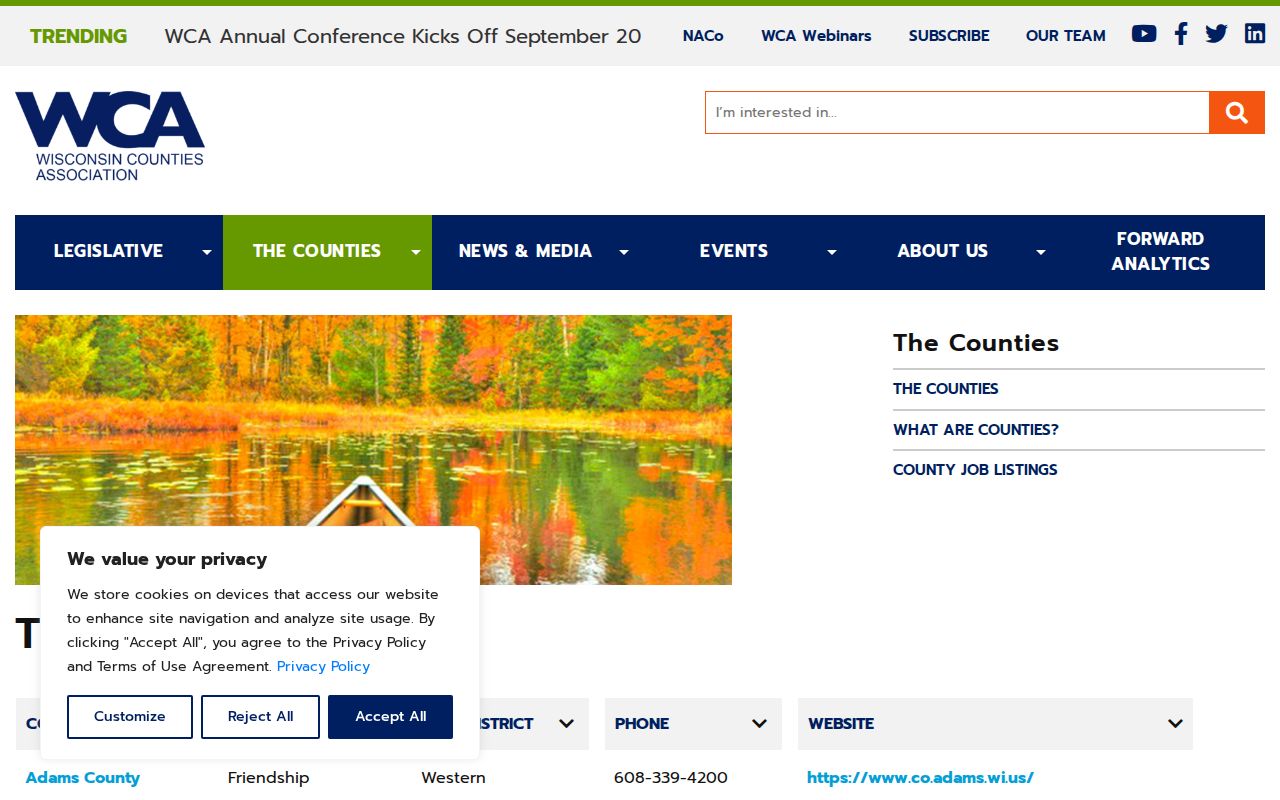
The directory supplies geography, not arrest data. Take the county name and go to that receiving agency's own booking source.
Custody and arrest reporting are different. A county booking can show that a person entered a facility, but it may not identify WSP as the arresting agency or explain the case outcome.
Requesting a WSP Arrest Report
WSP's official request page links to the current State Patrol records form. Your right to inspect records comes from Wis. Stat. § 19.35(1)(a). Describe an existing record with enough detail for staff to find it. Ask for a record of a specific event. Do not ask WSP to build a statewide arrest log from scratch. The page also warns that fulfillment times vary by post and request.
- Open WSP Open Records Requests and use the current form linked there.
- Give the incident date or time, location, and the trooper post or region if known. Describe the event in plain terms.
- Name the existing records sought, such as an incident report, arrest or citation record, or releasable identification image. Ask for an estimate of direct costs before work that may create a charge.
- Read the response for any redaction, delay, or withholding explanation. If the jail holds a separate booking record, request that from the receiving jail as well.
| Request issue | WisDOT's stated approach |
|---|---|
| Legal access | Inspection rights arise under Wis. Stat. § 19.35(1)(a), subject to applicable law and record-specific review. |
| Typical timing | A normal request may take about four to six weeks. Audio or video can take longer. |
| Cost | Permissible fees are actual necessary direct costs for reproduction, processing, or delivery, not a flat booking-photo charge. Electronic records may lower reproduction costs. |
| Limits | Protected personal information may be redacted. An open investigation may delay or prevent release under the relevant legal analysis. |
The official WSP request page describes the form, the usual timing, costs, and limits.
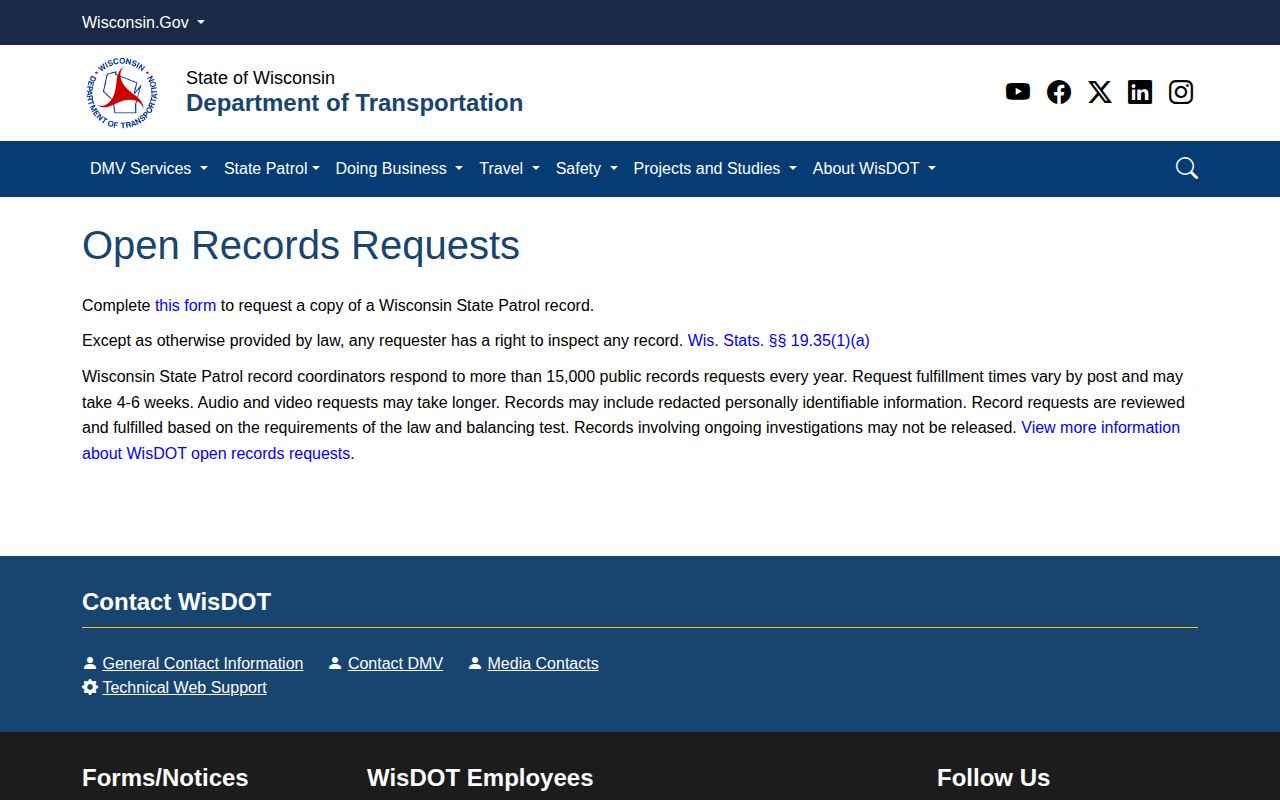
Expect audio and video to take longer. Use the live form on the page, since the direct link can change.
WSP says it handles over 15,000 requests each year. That volume is why no response estimate promises a completion date.
A strong request names the road or town. It also covers the event type, a date range, and the records you want. If recordings might exist, identify the incident. Then ask for any responsive audio or video. Do not assume it was kept or can be released. WisDOT may quote its actual direct costs. These can cover a permitted copy, a processing step, or a delivery method. Electronic copies can cut reproduction fees. No promise exists that every record sought is held, free, or released whole. Ask the records officer to explain any redaction or withholding.
WSP Enforcement Results and Arrest Campaigns
WisDOT posts State Patrol campaign results as news stories, not as a live arrest feed. The Drive Sober or Get Pulled Over release covers a statewide impaired-driving crackdown. A September 2024 Beltline enforcement release and an April 2025 Beltline release are also posted. Each shows how event-specific this reporting is. Each one describes campaign or partnership results within its stated scope.
The 2023 WSP annual report lists five State Patrol regions. It sorts criminal arrest and contact work into categories. These include controlled substances, warrants, other non-traffic arrests, and probation or parole contacts. Those are aggregate numbers. They show the breadth of WSP work. Yet they name no one and reveal no booking destination.
Reports can confirm a campaign happened. To learn whether a particular person was arrested and entered custody, check the responsible jail. You can also request the incident records from the agency.
Note: Aggregate enforcement totals describe agency activity across a reporting period, not the outcome of an individual court case.
Limits on a WSP Arrest Record
A newsroom item answers one question. A WSP report, a county booking entry, and a court case each answer a different one. Any of them can arrive late, incomplete, or partially withheld after legal review. Redaction hides protected parts of a released copy. Personally identifying information may be stripped out. An open investigation can delay material too. An agency with no matching record has not proven that no arrest occurred. The event may sit in another agency's files. It may simply be described differently.
A court disposition is the official outcome when a court file exists. A WSP release may never be updated to reflect later court action. A jail roster may stop showing a person after release.
For the later state-custody trail, use the Wisconsin DOC Offender Locator. It tracks DOC custody or supervision, not county jail bookings.